1/26/2020

Huntington's "We All Fall Down": Why is this Play Different....

The Cast of "We All Fall Down"
(photo: Nile Hawver)

We All Fall Down is Huntington Theatre Company's current production, the world premiere of a comedy by Somerville resident Lila Rose Kaplan, in her Huntington debut. It's the story of Linda (Eleanor Reissa), the matriarch of a non-observant Jewish family who suddenly decides to plan a Seder in her home in Westchester at “Passover in early April”. This comes as a surprise to the family, especially her husband Saul (Stephen Schnetzer), and the other characters, which include their two grown daughters Sammi (Liba Vaynberg) and Ariel (Dana Stern), Saul's sister Nan (Phyllis Kay), their former neighbor Beverly (Sarah Newhouse) and Linda's assistant Ester (Elle Borders). As Kaplan notes in the program, it started as a play about a daughter, evolving into a play about a whole family, in keeping with the playwright's body of theatrical works that emphasize women's stories and family intergenerational relationships. As she puts it, “we are so many ages inside. To put more than one age on stage and the page is really a more true portrait of what it is to be a human.” Director Melia Bensussen adds that the Haggadah, a text that tells you all the steps in a Seder, tells the story of Moses from birth to exodus, in the process becoming a theatrical experience that Kaplan describes as the original dinner theater. At a spare ninety minutes or so, it's fast if not furious, and soon answers the query as to why this play is different from other plays. Because it is.


The Cast of "We All Fall Down"
(photo: Nile Hawver)

It's a curious amalgam of Borscht belt comedy (for example, having Beverly, who is not Jewish, refer to Passover as the “Jewish Easter”) and underlying family tragedy. There is a longing for the beliefs that once brought people together. First-timers to a Seder are advised to bring with them a measure of patience, and no bread (or anything with leavening, no yeast or beer). It comes to pass that we realize that there's a place for everyone here, as we celebrate liberation: while we were once slaves, we are now free. Playwright Kaplan admits that the fact that her first name, Lila, means “night” in Hebrew, led her to explore why this night is different from all other nights, and to reflect on the reason people from Jewish culture are drawn to Seder, namely the same reason we are all drawn to theater: we come together for storytelling, which helps us to become better at being human. This concept comes vividly true toward the end of the play when it somewhat suddenly shifts to seriousness even as the family re-enacts the old familiar nursery rhyme from childhood:

     Ring around the rosy, a pocket full of posies, ash, ash, we all fall down.

The meaning of the song has long been lost to the ages, but the use of it in this pivotal scene exposes what one already has surmised if she or he has been paying attention to the clues the playwright has dropped along the way.


The Cast of "We All Fall Down"
(photo: Neil Hawver)

This play, already extended through February 15th, features the sadly funny Reissa in the matriarchal role, a difficult character to play given her obtuseness about some every day factoids, and the secretive Schnetzer, a Catholic Memorial High School graduate (as is this critic), holding his own surrounded by a half dozen actresses: Borders, Newhouse, Vaynberg, Stern and especially Kay (long associated with Trinity Rep in Providence). Under the direction of Bensussen, they manage to elevate the more sitcom moments in the work (which even has black-outs, and features a trio of urination scenes). The creative team boasts clever Scenic Design by Judy Gailen, Costume Design by Karen Perry (one really over the top), Lighting Design by Russell H. Champa and Sound Design by David Remedios.

Lurking beneath the sporadic hilarity of the play, as in most comedies, is a serious look at the ever-expanding reality that many folks of previous faith have lost the spiritual aspects of their daily existence, exhibited in the wry expression “I don't believe in God, but I miss Him”; or, as Pogo long ago put it in his comic strip philosophical musings, “God isn't dead, He's just unemployed”.


1/20/2020

speakeasy's "pass over": but also.....

dapping up: hubens "bobby" cius & kadahj bennett in "pass over"
(photo: nile scott studio)

pass over, a new play by antoinette nwandu, is the current co-production by speakeasy stage company and the front porch arts collective. after first being performed by chicago's steppenwolf, it was then produced in new york at lincoln center, where it won the lortel award for best play (and was filmed for amazon by none other than spike lee).

described as a “mash-up” of waiting for godot (considered by some as a theatrical masterpiece and by others as like watching paint dry) and the exodus story. at a spare ninety minutes, directed by monica white ndounou, it's written all in lower case, reminiscent of the poetry of e.e.cummings, performed as though it were blank verse or rap without music. the setting is “now, right now, but also 1855, but also the thirteenth century b.c.e”. the time is “a ghetto street, a lamppost, night, but also a plantation, but also egypt, a city built by slaves”.


ossifer enters: lewis d. wheeler, hubens "bobby" cius & kadahj bennett in "pass over"
(photo: nile scott studios)


its cast is spare as well. one is a young black man named moses (kadahj bennett) “but also a slave driver, but also the prophesied leader of god's chosen people”; a second young black man is named kitch (hubens “bobby” cius) “but also a slave but also one of god's chosen”; the remaining two roles, both played by lewis d. wheeler, are mister, a seemingly wholesome chap given to expressions like “gosh golly gee”, “but also a plantation owner but also the pharoah's son” and ossifer, an officer of the law (or “po-op”), “but also a patroller but also a soldier in the pharoah's army”. as in the becket play, the two lead characters are unable to leave their street corner. there is no intermission; if moses and kitch cannot leave neither can we.


mister's picnic: lewis d. wheeler, kadahj bennett & hubens "bobby" cius in "pass over"
(photo: nile scott studios)


there are some obvious parallels to becket even in a brief synopsis of the work, but it stands on its own as an absorbing and alarming expose of contemporary black experience. kitch declares that the name “moses” portends that he will lead “deez boys right off deez streets on to dat promised land”. moses himself alludes to a land of milk and honey despite lactose intolerance and glycemic indexes, as these are the least of their troubles, truly nothing compared to the obliviousness of “mister” who cannot grasp why they get to use the “n-word” but he does not; he is clueless about his not having the right to use the word. (yet, interestingly, the playwright feels free to portray moses' use of the charged term “faggot”). moses disses those who are fixated on passing over to the promised land of heaven, where he proclaims he wants that good life now. it's telling that both young men can recall every name of those who have been killed in their hood, giving the lie to the presumption that these victims (including one of the most oppressed societal groupings, that of trans people of color) are ordinary, even forgettable. in ancient pyramidal times, in the not-so-ancient plantation era, and on the inescapable street corner, once again history repeats itself, or at least rhymes.


promised land: hubens "bobby" cius & kadahj bennett in "pass over"
(photo: nile scott studios)

attention must be paid not just to the triumph of the playwright's words on the page but also in its execution by director ndounou and her three stellar actors, each of whom seems to be thoroughly immersed in his character. the simple but effective contributions of the creative team include scenic design by baron e. pugh, costume design by chelsea kerl, lighting design by kathy a. perkins, and sound design by anna drummond.


promised land 2: hubens "bobby" cius & kadahj bennett in "pass over"
(photo: nile scott studios)

as the playwright herself puts it, an audience won't be immediately transformed or relieved of her or his baggage, but find such baggage “a little bit shifted”. the most memorable aspect of her play, as opposed to becket's, is that her characters aren't left alone, to age. just as the frequent use of the “n-word” can never be completely erased, and in fact has become for the community of color an expression of brotherhood (and sisterhood), so audience members may find this sometimes enigmatic work either an affirmation or a revelation.

what they won't feel is that it is forgettable, (extended through february 2nd), but also.....


1/12/2020

Lyric's "Cake": More than a Mere Trifle?

Karen MacDonald, Chelsea Diehl & Kris Sidberry in "Cake"
(photo: Mark S. Howard)

Anytime local theatrical treasure Karen MacDonald takes to the stage, there is cause for celebration, perhaps calling for an appropriate response, which might well result, given the right vehicle, in the creation of a cake. Such is the case in the current Lyric Stage offering, the new comedy The Cake, by Bekah Brunstetter, wherein MacDonald and her three co-stars react in various ways to the gradual revelation that there is to be a wedding for which she is asked to provide the central culinary element. By the time it becomes clear what the decision to bake or not to bake will be, the audience will have been exposed to the existential crisis that this seemingly simple request will entail, and how religious and political contrasting viewpoints will be exposed as a recipe for conflict.

Karen MacDonald in "Cake"
(photo: Mark S. Howard)
 
You see, the ceremony is to join in matrimony Jen (Chelsea Diehl) the daughter of the late best friend of Della (MacDonald) to her bride-to-be Macy (Kris Sidberry), which causes a dilemma, since Della is the proprietress of North Carolina's Della's Sweets and is not coincidentally a far-right bigot married to another far-right bigot, Tim (Fred Sullivan, Jr.). There are other layers in the story (notably an upcoming appearance on a televised baking show contest), which seem to exist primarily to assure us that Della is still “agreeable” despite her deep-seated ideas regarding same-gender marriages. But it's somewhat equivalent to the concept of a mother-in-law recipe with something intentionally omitted.


Fred Sullivan, Jr. & Karen MacDonald in "Cake"
(photo: Mark S. Howard)

That omission is the very real issue of discrimination, which is treated comically, glossing over the ugly underbelly of this ninety-minute one act treatment. It's a tribute to MacDonald's prowess as an actor that she manages to present her character in a believable way; the same could be said for the remainder of the cast, with Diehl's earnest portrayal alongside Sidberry's overt LGBTQ militancy and Sullivan's hilarious spouse with his heterosexual intimacy hangups. It's of some interest that the creative team includes an Intimacy Director (Ted Hewlett) in addition to the expert Direction by Courtney O'Connor (currently the Acting Artistic Director of the company). Despite the histrionic talent on display, the play has some half-baked elements, but this production is fortunate to have several estimable creative contributions, from the Scenic Design by Matt Whiton, to the Costume Design by Charles Schoonmaker, Lighting Design by Aja Jackson and Original Music and Sound Design by Arshan Gailus. They're all supportive of the play's heart, with MacDonald as the frosting.


Kris Sidberry & Karen MacDonald in "Cake"
(photo: Mark S. Howard)

There are some clever elements to the story (references to Noah's Ark and the dinosaurs, Chick Fil-A and the like) and a few hysterically memorable moments. This being a comedy, the end is rather baked in, so to speak, and its intentions, though often predictable, are admirable. On the whole, this production is well done.
 
As Della ultimately proclaims, “you need cake”, until February 9th.


1/04/2020

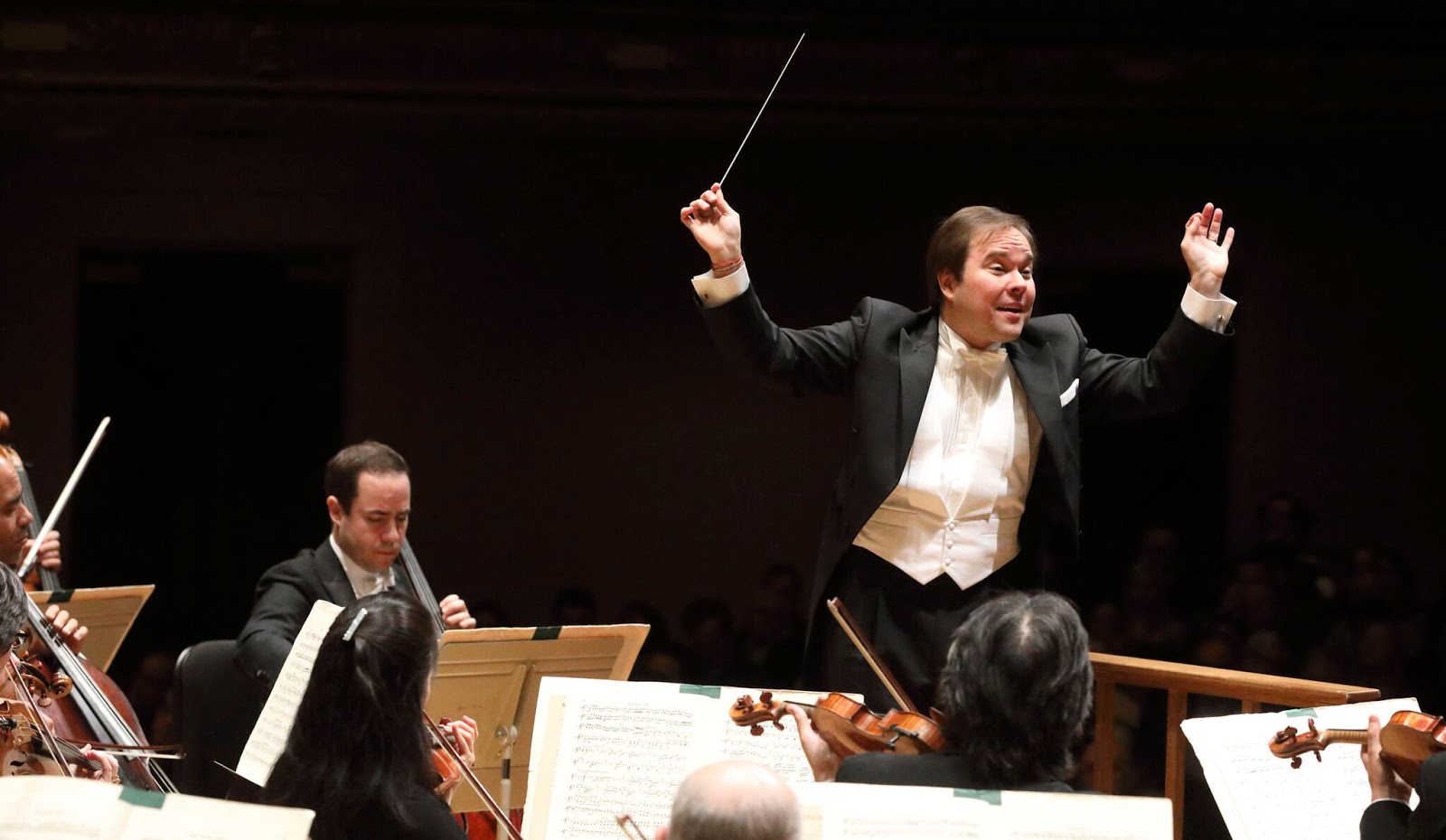
BSO's "Beethoven/Tchaikovsky": Two Fifths


Marcelo Lehninger conducting the BSO
(photo: Hilary Scott)

Beethoven's Overture to the Creatures of Prometheus, Opus 43 made for a fine if relatively slight curtain raiser (only five minutes in length) for the Boston Symphony's latest program. First performed in Vienna in 1801, it was introduced to Tanglewood audiences in 1958 (and again, most recently, in 2014). It was for the youthful composer his first mature score for theatrical use, namely to support a ballet. The brevity of the piece about the fable of Prometheus and two statues brought to life makes for an uncharacteristic comparatively light composition for Beethoven, but served to set the mood for this BSO concert, under the baton of Marcelo Lehninger, former BSO Assistant Conductor, who last led the BSO in 2014.

There followed a performance of Beethoven's Piano Concerto No.5 in E-Flat, Opus 73, a substantially more impressive work (clocking in at forty-two minutes), featuring Pianist Javier Perianes, who last played with the BSO in 2016. Aptly described in the program notes as “heaven-storming”, it was Beethoven's final concerto, first heard in 1811, as part of what is generally acknowledged as the “heroic period”. Its initial BSO performance was in 1911 and at Tanglewood in 1947. It was seen by the composer himself as a real affirmation while in the midst of “terrible times” (Austria being engaged in one of several consecutive wars with France). Known in English-speaking countries as the “Emperor” (for reasons that are totally unclear) it is a deservedly beloved work that includes amongst its movements the longest he ever wrote. The audience at the matinee performance was nothing short of ecstatic for Lehninger, Perianes (who earned his encore) and the orchestra itself.


Maestro Marcelo Lehninger & Pianist Javier Perianes with the BSO
(photo: Hilary Scott)

The second half of the program consisted of Tchaikovsky's Symphony No.5 in E Minor Opus 64, another rousing piece at forty-seven minutes with its powerful lyrical theme of the Fates that unites all four of its movements. His Fourth had been his symphony of triumph over fate, an imitation of Beethoven’s Fifth. As noted in this concert's program, for Tchaikovsky’s own Fifth Symphony, we have an outlining for the scenario for the first movement: “Introduction. Complete resignation before Fate, or, which is the same, before the inscrutable predestination of Providence. Allegro. Murmurs of doubt, complaints, reproaches against XXX. Shall I throw myself in the embraces of faith? A wonderful program, if only it can be carried out.” The composer's reference to “XXX” is generally considered most likely an allusion to his homosexuality, which terrified him as a possible cause of scandal; others attribute this to his gambling addiction. Though he detested it when writers interpreted his musical processes too literally, the theme with which the clarinets (beautifully played and justly singled out for applause), in their lowest register, begin the symphony has a function other than its musical one: it reappears as a catastrophic interruption of the second movement’s love song, with the languid dance of the waltz, and in its majestic E major triumph. Tchaikovsky’s terrific gift of melody is shown in his delight in what he calls “strong effects” and his skill at bringing them off, with quite remarkable effect yet with great economy. After his return from a journey to Prague (where the experience of conducting the Fifth produced the most depression in him) he quickly began work on The Sleeping Beauty, and not long after that, his finest operatic score, The Queen of Spades. But once again Lehninger (conducting this time from memory) proved the Fifth Symphony itself worthy of the almost hysterical climaxes it provides. Both central movements were delights in quite different ways, and the audience for both gave enthusiastic approval. It was the Boston Symphony Orchestra at its finest.


12/13/2019

Moonbox's "Parade": Uncivil Wars

Phil Tayler & Anna Bortnick in "Parade"
(photo: Sharman Altshuler)
 
With the holidays looming, leave it to Moonbox Productions to provide the near perfect gift for your family, friends and yourselves, in the form of the musical play Parade, with Music and Lyrics by Jason Robert Brown (for his first Broadway production) and Book by Alfred Uhry. Winner of the 1998 Tony Awards for Best Book and Score (out of nine nominations) and six Drama Desk Awards, it had a limited run of 84 performances at Lincoln Center, with an astonishingly large cast of thirty-seven, and is now playing at the Calderwood Pavilion's Boston Center for the Arts, with an equally astonishingly large (for regional theater at least) local cast of sixteen, covering two dozen roles. It's a somewhat daunting challenge, but if any company can manage it, doubtlessly Moonbox can, and does. In fact, this is arguably the best piece of musical theater ever performed by this company (and that's saying a lot) and easily the best show of this season. It's that good; it's that great. Storytelling and craft don't get much better than this.


The Cast of "Parade"
(photo: Sharman Altshuler)

The musical's story begins as a Confederate soldier goes off to fight the Civil War, and segues to 1913 when the disabled veteran readies himself to march in the annual Confederate Memorial Day parade held dear by Southerners who refused to commemorate their loss in the war. The (true) story takes place at the trial of a Brooklyn-born Jewish factory manager in Atlanta, Leo Frank (Phil Tayler, reason enough to see any show), accused of raping and murdering his thirteen-year-old employee Mary (Anna Bortnick), daughter of Mrs. Phagan (Anne Sablich). She had previously flirted with Frankie Epps (Gable Kinsman), who falsely testified that she complained to him about the looks Frank would give her. Thanks to this lie (corroborated by a trio of young girls who knew her, played by Lilli Jacobs, Katie Elinoff and Angela Syrett) and a rabid press, including right-wing journalist Tom Watson (Todd Yard) and ambitious novice newsman Britt Craig (Dan Prior), as well as politician Hugh Dorsey (Jerry Bisantz) who resolves to solve the case, and an equally rabid crowd.


 Aaron Patterson & The Cast of "Parade"
(photo: Sharman Altshuler)

With testimony from worker Jim Conley (Aaron Patterson), Frank was convicted and sentenced to death by Judge Roan (Brad Peloquin). When this death sentence was commuted, a mob emerged to attempt to take justice into their own hands. One eerie note: librettist Uhry's great-uncle in real life owned the factory managed by Frank. Also featured in the cast of characters as witnesses are Minnie McKnight (Yewande Odetoyinbo) and Newt Lee (Elbert Joseph), as well as Luther Rossner (Andrew Child). Everyone in this production, beginning with Tayler and his wife Lucille's (Haley K. Clay) slowly percolating roles and extending to some show-stealing turns by Prior and Patterson, was stellar.


Dan Prior & Gable Kinsman in "Parade"
(photo: Sharman Altshuler)

The later 1915 parade passes by as the ensemble reprises “The Old Red Hills of Home” and the score ends with this as well. There are more than two dozen songs in all, making this work virtually operatic, with standouts such as “Pretty Music”, “Do It Alone”, Leo's poignant “It's Hard to Speak My Heart”, Conley's jaunty “That's What He Said”, the jury's chilling cakewalk “Closing Statement and Verdict” and “All the Wasted Time”, Frank and Lucille's near-finale duet; this song expressly deals with how both have grown through their impending tragedy and their captivating relationship, after Lucille castigated him for his intention to work on a holiday. Their feelings morph from cold to warm as Lucille begins to fight for her husband's freedom and his life. Throughout the play, Brown displays obvious homages to the Great American Songbook, from Sousa to Sondheim, a mesmerizing score sung by a meticulously elegant cast.


Phil Tayler & Haley K. Clay in "Parade"
(photo: Sharman Altshuler)
 
Wonderfully Directed by Jason Modica, the production boasts almost non-stop, exquisite Choreography by Kira Troilo, impeccable Music Direction by Catherine Stornetta, fabulously imagined Set Design by Lindsay Genevieve Fuori, terrific Costume Design by Chelsea Kerl, essential Lighting Design by Steve Shack and ominous Sound Design by Elizabeth Cahill. On the performance and creative levels, there's not a nit to pick. This is as close to perfection as regional theater (or any theater) gets, fundamentally due to Modica and Tayler, whose dedication to the work goes back a decade to their Boston Conservatory efforts. It may be a less hopeful entity these days, but remains a haunting work, and an obvious labor of love.

It should be noted that both the revival of the KKK (Klu Klux Klan) and the rise of the ADL (Anti-Defamation League) resulted from this historical event. 'Nuff said.

Before this Parade passes by, be sure to take it in, through December 28th.


12/12/2019

ART's "Moby-Dick": Call Me a Schlemiel

Manik Choksi & The Cast of "Moby Dick"
(photo: Evgenia Eliseeva)

Call one whatever, but who knew? Moby-Dick? Harpooned, yes, but hyphenated too? As it turns out, yes and no; it depends on which edition one's referring to, back when Herman Melville first published his iconic 1851 novel of rage, revenge and reverence, with hyphen in one published version, without it in another. Neither was a success, for the balance of his lifetime, but it would eventually be held up as an integral addition to American literature (in fact declared the greatest American novel ever written by none other than Nathaniel Philbrick). In more recent times, the work has been the source for countless film and operatic versions, and now, at American Repertory Theatre in Cambridge, it's in the creative hands of the folks who brought you Natasha, Pierre and the Great Comet of 1812. With that provenance one would expect this, with Music, Lyrics, Book and Orchestrations by Dave Malloy, Developed with and Directed by Rachel Chavkin, to be a revelation.


The Cast of "Moby Dick"
(photo: Evgenia Eliseeva)

As it turns out, again, yes and no. If broadly written, acted and directed slapstick is your thing, then half of this show would be right up your alley. If not, then it must be said that the good (or bad) ship Pequod is barely afloat, in fact adrift, revealing neither focus nor purpose. Given the source material in the novel, with its vast cornucopia of symbols, themes and metaphors, subtlety surely would be called for, but is sorely lacking in this production. The complexities are there beneath the surface, from the pure whiteness of the titular animal with its forces (nature, God, fate) beyond man's control  vs. free will, to the inevitability of evil amid moral ambiguity. You'll find the original author's themes of duty, defiance, doubt and death, along with obsession, the limits of knowledge and the pervasive underbelly of race. It also preserves the narrator's quest, his spiritual journey to discover his own sense of self. A few decades ago, this critic enrolled in a Harvard course on Religion and Literature given by Amos Wilder (brother of Thornton), whose emphasis on this very novel was revelatory. This mashup of theatrically bizarre elements reveals only how even the most renowned creative folks can go so horribly off course. After three and a half hours of sophomoric mayhem one almost ends up cheering on the whale. Not that there isn't a lot of talent on display; it's just diluted by overlong segments involving an anachronistic stand-up comic routine that's well done but overdone, a seemingly endless boat ride that involves audience participation straight out of a ride at Disneyland, and an extended showstopper (in a bad sense) of a deviation dealing with Pip that also seems to go on forever (because it does).


The Cast of "Moby Dick"
(photo: Evgenia Eliseeva)

On the plus side, there's a good deal of memorable music in varying styles from jazz to gospel to folk/country to Broadway (and even echoes of whales clicking), all performed by an inexhaustibly energetic cast consisting of Ishmael (Manik Choksi), Queequeg (Andrew Cristi), Starbuck (Starr Busby), Blacksmith/Sailor 1 (Ashkon Davaran), Flask (Anna Ishida), Tashtego (Matt Kizer), Daggoo (J. D. Mollison), Ahab (Tom Nelis), Pip (Morgan Siobhan Green), Stubb (Kalyn West), Fedallah (Eric Berryman), Carpenter/Sailor 2 (Kim Blanck) and Father Mapple/Captains of the Albatross, the Bachelor & the Rachel (Dawn L. Troupe). Standouts include Troupe, Nelis and Choksi, but there's not a clinker in the bunch. As for the rest of the creative team, the complex Musical Direction and Supervision was by Or Matias, with lively Choreography by Chanel Da Silva, overwhelmingly enveloping Scenic Design by Mimi Lien (with reflections of Quaker meeting houses, and a life of violent and broken obsession), eclectic but apt Costume Design by Brenda Abbandandolo, extraordinary Lighting Design by Bradley King, equally important Sound Design by Hidenori Nakajo and clever Puppet Direction by Eric F. Avery. One is tempted to repeat one's own recent reference in another review: Squid pro quo; fortunately, one resisted this temptation.


Andrew Cristi & The Cast of "Moby Dick"
(photo: Evgenia Eliseeva)

Would that the powers behind this theatrical quest had resisted the obvious lure of including material from 40 of the 135 chapters in the book (by comparison, their Natasha, Pierre and the Great Comet of 1812 was based on 70 pages from War and Peace). There are some captivating choices (clarifying the homoerotic feelings of the narrator toward his “cannibalistic” bedmate, for example; or the songs about etymology, cetology and squeezing sperm; or frequent pulverizing of the fourth wall), and about half of the show would make a very promising piece of theater. As it now stands, it's correctly described by Chavkin as “epic messiness”. What this work cries out for is not a harpoon but scissors; it's such a mash-up of three and a half hours of random set pieces and performance art that it threatens to destroy all the good aspects of blubberhood. Succinctly, the show's playbill cover subtitle says it all: “a musical reckoning”; if you have the patience and stamina to await its best moments, there is a lot of wheat amongst the chaff.

Meanwhile, we are all in the belly of the whale, at least until January 12th.


12/08/2019

New Rep's "Oliver!": Feud, Glorious Feud

Ben Choi-Harris & Andy Papas in "Oliver!"
(photo: Andrew Brilliant/Brilliant Pictures)

As bemoaned by this critic in the past, the stage musical version of Charles Dickens' Oliver Twist is infrequently produced these days, in large part because of the challenge of casting very young lead actors. After all, the well-known story from Dickens' 1850 original novel features two different British social worlds engaged in feuding against one another for the life and soul of the titular orphan and involves a good number of workhouse young boys with those two lead roles that are essential to the tale. When the London stage production debuted in 1960 and two years later on Broadway (winning three Tony Awards including Best Musical), then in a filmed version (winning an Academy Award for Best Picture), the success of all these versions depended heavily on the charisma of the actors portraying the characters of Oliver and the Artful Dodger. New Rep in Watertown has managed to rediscover a gem named Ben Choi-Harris (Oliver); but not with some questionable nontraditional casting of a female, Sydney Johnston (The Artful Dodger), who looked and acted as feminine as they come. But Choi-Harris and his impeccable Director/Choreographer Michael J. Bobbitt provided the foundation for a production that can only be described as perfect holiday fare, surely deserving of the exclamatory title, Oliver!. Bobbitt knows how to stage a crowd, as well as inventing a lot of visual movement. He's a true find for future musicals to come from New Rep.


Cast of "Oliver!"
(photo: Andrew Brilliant/Brilliant Pictures)

Any version of this show (which notoriously has a very slow start) requires versatile singing, dancing and acting performers, such as the role of the conniving yet captivating “receiver” Fagin (Austin Pendleton), who seemed miscast, though he's been a favorite of this critic since 1964's Broadway Fiddler on the Roof  and 1970's off-Broadway Last Sweet Days of Isaac; but it needs even more a heartbreaking Nancy (Daisy Layman), which it has, as she belts out the show's best rousing songs as well as a thrilling torch song or two, as well as the inherently and unredeemably evil Bill Sikes (Rashed Alnuaimi), the hilariously hypocritical workhouse owners, Mr. Bumble (Andy Papas) and Widow Corney (Johanna Carlisle-Zepeda), and the equally hypocritical and aptly-named funeral director's wife Mrs. Sowerberry (Shannon Lee Jones). They are, individually as well as collectively, about as professionally perfect as one could hope for, and that includes the entire ensemble, such as Noah Claypool (Jackson Jirard), Bet (Daniela Delahuerta) and the housekeeper Mrs. Bedwin (Jones again). Rarely has one encountered such a capable Oliver as Choi-Harris (often played by actors outside their range). But wait, there's more.


Ian Freedson Falck. Austin Pendleton, Jane Jakubowski & Mark Johnson in "Oliver!"
(photo: Andrew Brilliant/Brilliant Pictures)

That professional level goes for the creative team as well, especially with regard to the work of Director-Choreographer Michael J. Bobbitt (the company's new Artistic Director). Along with the stupendous Scenic Design by Luciana Stecconi and wondrous Costume Design (except for Nancy's bizarre outfit and Cruella de Ville hairstyle) by Rachel Padula-Shufelt, terrific Lighting Design by Frank Meissner and effective Sound Design by Kevin L. Alexander, there is the marvelous Musical Direction by Sariva Goetz, and, at the core of the work, the triple threat contribution by the musical's creator Lionel Bart, who wrote the Book, Music and Lyrics (a feat perhaps only Frank Loessor or Meredith Wilson could so perfectly match), even though he couldn't write or read a single musical note. Not only was Bart true to Dickensian themes, his work was respected here by Bobbitt with this tight rendition, with great attention to the score and some witty references to the works of Tim Burton, Lemony Snicket and Edward Gorey. In Bobbitt's hands, these kids are wonderful, with a real standout performance by Jane Jakubowski.


Daisy Layman & The Cast of "Oliver!"
(photo: Andrew Brilliant/Brilliant Pictures)

And oh, that score! From the show's opener, “Food, Glorious Food” to Oliver's poignant plea “Where Is Love?” to Dodger's show-stopping “Consider Yourself”, to Nancy's “As Long As He Needs Me” and Fagin's eleven o'clock number, “Reviewing the Situation”, it's chock full of unforgettable musical pieces. The score's sources range from the traditional British music hall to complex counterpoint sung a cappella, every song character-driven. Even Nancy's fate (with its abusive aspects) is here tempered by her strength and redeeming choices in the end. The only pity is that the second act includes no fewer than five reprises out of its ten numbers. For the most part the musical numbers are a treat, from the title song to “It's a Fine Life”, “I'd Do Anything”, “Be Back Soon”, and “Who Will Buy?”, apart from some that are needed just to advance the story, such as “I Shall Scream”, “Boy for Sale”, “That's Your Funeral”, and “My Name”. Just consider, yourself, Nancy's pub number, "Oom-Pah-Pah" (this critic's favorite) with its typical (and innocently highly suggestive) lyrics.


The Cast of "Oliver!"
(photo: Andrew Brilliant/Brilliant Pictures)

As is equally true in Dickens' seminal source, everything about a successful Oliver! demonstrates precisely how character-driven this work is at every level. It is wisely presented as a dark musical “comedy” meant to entertain. Storytelling in theater simply doesn't get any better than this. Period. Full stop. And do by all means make a full stop at New Rep for this quintessential example of musical theater at its best, and, in the tradition of past exclamation-pointed shows (think Oklahoma!, Hello, Dolly! and the like) it's nearly Broadway caliber. So review your situation and find time for this perfect choice for holiday theater.

See it even if you've got to pick a pocket or two to do so, through December 29th.